
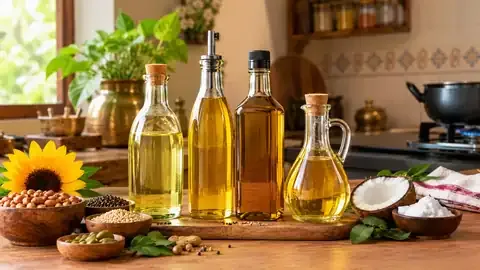
Best Cooking Oil for Health: How to Choose for Everyday Indian Cooking
The oil in the kadai reaches almost every meal, from the first tempering of the morning to the last fried snack of the evening. That makes the choice of the best cooking oil for health as important as the choice of grain or dal. A healthy oil depends on how it is extracted, what it is pressed from and how it is used in the kitchen. This article compares gingelly, groundnut and coconut oil, matches each one to familiar Indian dishes, and shows how a family can rotate them through the week.
What Makes the Best Cooking Oil for Health
The best cooking oil for health usually shares three qualities: a gentle extraction method, a single recognisable source and a good match with the cooking method. A closer look at cold-pressed vs refined oil starts with extraction. An unrefined cooking oil, such as a cold-pressed or wood-pressed oil, is extracted at low temperature, which keeps the natural colour, aroma and compounds such as vitamin E. Refined oils pass through heating, bleaching and deodorising steps, which give a neutral taste and a long shelf life.
A natural cooking oil keeps the character of its seed or nut, so the aroma of a freshly pressed oil is a useful sign of quality. Pure cooking oil comes from one source and is pressed on its own, with every drop coming from that single seed or nut. Heat matters as well, because gentle heat keeps the flavour of a pressed oil intact. A healthy cooking oil therefore suits its task, with gentler oils for tempering and sturdier oils for frying. Taken together, these three points make it easier to choose the best cooking oil for health by looking at the process and the dish instead of relying only on labels.
Healthy Gingelly Oil for Tempering and Finishing
Healthy sesame oil begins with raw, untoasted seeds, which give a light colour and a mild aroma. Pressed in this way, gingelly oil suits the tempering of mustard seeds and curry leaves, and it works well as a finishing oil over rice, paruppu podi or curd rice. A teaspoon stirred into a cup of warm rice with podi is a simple way to enjoy its aroma. Healthy gingelly oil is best used over low to medium heat, since gentle heat keeps its flavour intact. Many homes also use it for traditional oil massage, which shows how long this oil has been part of the household. For finishing dishes, it remains a strong choice in any search for the best cooking oil for health in a South Indian kitchen.
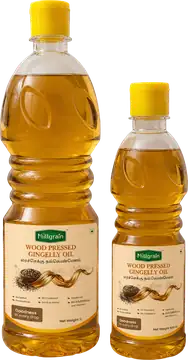
Healthy Groundnut Oil for Frying and Daily Cooking
Healthy groundnut oil comes from nuts pressed in a wooden press, which keeps the golden colour, nutty aroma, and natural vitamin E. Groundnut oil has a high smoke point, so it holds up well as a healthy oil for frying pooris, pakodas and vadas, and it suits dals, curries and stir-fries equally well. For everyday frying, heating the oil gradually on a medium flame gives even colour and a crisp finish. It is a practical pick for anyone who wants the best cooking oil for health in a kitchen that also fries often. Fresh oil for each frying session keeps the flavour clean and the food light.
Healthy Coconut Oil for South Indian Dishes
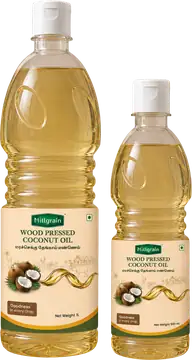
Healthy coconut oil is a regular in Kerala and coastal kitchens, where it flavours avial, kootu, thoran and stir-fries. Pressed from mature coconuts at low temperature, Pure Organic Coconut Oil keeps a clean coconut aroma that pairs well with curry leaves and mustard seeds. It also suits millet dishes such as upma and kuthiraivali pongal. Coconut oil is rich in saturated fat, so a small measured amount is the sensible way to use it. For anyone seeking the best oil for South Indian cooking, coconut oil is a natural starting point for coconut-based dishes and millet preparations. Added after cooking, a teaspoon of coconut oil over kootu or dal gives a fresh, fragrant finish. For coastal and coconut-based meals, it is a fitting choice when the aim is the best cooking oil for health that also keeps traditional flavours intact.
Best Oil for Indian Cooking, Dish by Dish
The best oil for Indian cooking depends on the dish, since tempering, frying, and finishing each ask for something different. The table below matches the best cooking oil for health to each method, so choosing a cooking oil for daily use from the range of cold-pressed oils becomes simple.
| Dish or Method | Suggested Oil | Why It Works |
|---|---|---|
| Tempering for dal and sambar | Groundnut or gingelly oil | Mild flavour that lets the spices lead |
| Frying pooris, vadas and pakodas | Groundnut oil | Holds up well to high heat |
| Avial, kootu and thoran | Coconut oil | Matches the coconut base |
| Curd rice, paruppu podi and idli podi | Gingelly oil | Adds aroma as a finishing oil |
| Dosa and uttapam | Gingelly or groundnut oil | Light flavour that suits batter |
| Millet upma and pongal | Coconut or groundnut oil | Suits the mild taste of millets |
| Stir-fried vegetables | Groundnut or coconut oil | Handles quick, medium heat |
Once these matches become a habit, choosing the best cooking oil for health at the stove takes only a moment.
Rotating Oils Through the Week
Different dishes call for different oils, so many families rotate oils through the week. A simple pattern is groundnut oil for weekday tempering and frying, coconut oil for two or three coconut-based meals, and gingelly oil as a finishing oil for rice dishes and podi. Rotation keeps meals varied and spreads the choice of fats across the week. Households with children and elders also find that it brings variety to the table while every dish keeps its familiar taste. For a family choosing the best cooking oil for health, this flexible approach is easier to follow than a strict rule.
A cold-pressed oil combo that includes groundnut, gingelly and coconut oils covers all three roles in one kitchen. Cold-pressed oil for health works best as a steady habit, and healthy oil for daily cooking is simply the oil that suits the dish and is used in a measured amount. The best cooking oil for families is often a small set of oils rather than a single bottle.
Points to Keep in Mind Before Choosing
Measuring oil with a spoon instead of pouring from the bottle keeps portions steady, since even the best cooking oil for health adds calories. Fresh oil for each round of frying is the better habit, and oil that starts to smoke in the pan is best replaced, since smoking produces byproducts that affect health. Storing cooking oils in a cool, dry cupboard away from sunlight keeps the aroma fresh from the first use to the last. People with sesame or peanut allergies, high cholesterol or heart conditions can check with a doctor or dietitian about the oils that suit them.
Choosing Oils for Everyday Cooking
Simple pressed oils sit comfortably beside everyday Pure Organic foods such as millets, dals and fresh vegetables, and together they make daily cooking more wholesome. Choosing the best cooking oil for health becomes easier once each oil has a clear role: groundnut for frying, gingelly for finishing and coconut for coconut-based dishes. Starting with one dish this week is an easy way to see how a good oil changes the flavour of home cooking.
Frequently asked questions
Which cooking oil is best for daily use in an Indian home?
A small set of cold-pressed oils such as groundnut, gingelly and coconut oil suits most kitchens. Matching each oil to the dish keeps both flavour and cooking quality high.
Is cold-pressed oil healthier than refined oil?
Cold-pressed oil is extracted at low temperature, so it keeps more of the natural aroma, colour, and vitamin E of the seed or nut. Refined oil has a neutral taste and a longer shelf life, so the choice depends on the dish and personal preference.
Can groundnut oil be used for everyday frying?
Yes, groundnut oil has a high smoke point and suits pooris, vadas and pakodas. Using fresh oil for each frying session keeps the food light and the flavour clean.
Is coconut oil good for everyday cooking?
Coconut oil suits tempering, stir-fries and coconut-based dishes such as avial and thoran. Because it is rich in saturated fat, a small measured amount works best.
How often should cooking oils be rotated?
Many families use one oil for a few days and then switch, so groundnut, coconut and gingelly oil all find a place in the week. A doctor or dietitian can suggest the best pattern for anyone with a health condition.